Northeastern and Dana-Farber team up to train the next generation of oncology nurses
The Northeastern partnership with Dana-Farber integrates oncology-specific expertise across all levels of nursing education, from undergraduate to Ph.D., while expanding research and clinical training opportunities.

In the midst of a global nursing shortage combined with a growing need for oncology patient care, Northeastern University and Dana-Farber Cancer Institute have launched a first-of-its-kind partnership to strengthen the oncology nursing workforce.
At the center is a joint faculty model that provides Dana-Farber nurse scientists with academic appointments at Northeastern — the first such arrangement in Dana-Farber’s history.
The initiative integrates oncology-specific expertise across all levels of nursing education, from undergraduate to Ph.D., while expanding research and clinical training opportunities.
“Through this partnership with Dana-Farber, our nursing students will learn from faculty who are actively advancing the science of oncology care at one of the world’s leading cancer centers,” said Carmen Sceppa, dean of Bouvé College of Health Sciences at Northeastern University. “This, combined with our commitment to experiential learning, means our graduates won’t just enter the workforce with theoretical knowledge — they’ll arrive with the experience and specialized expertise needed to provide exceptional cancer care from day one.”
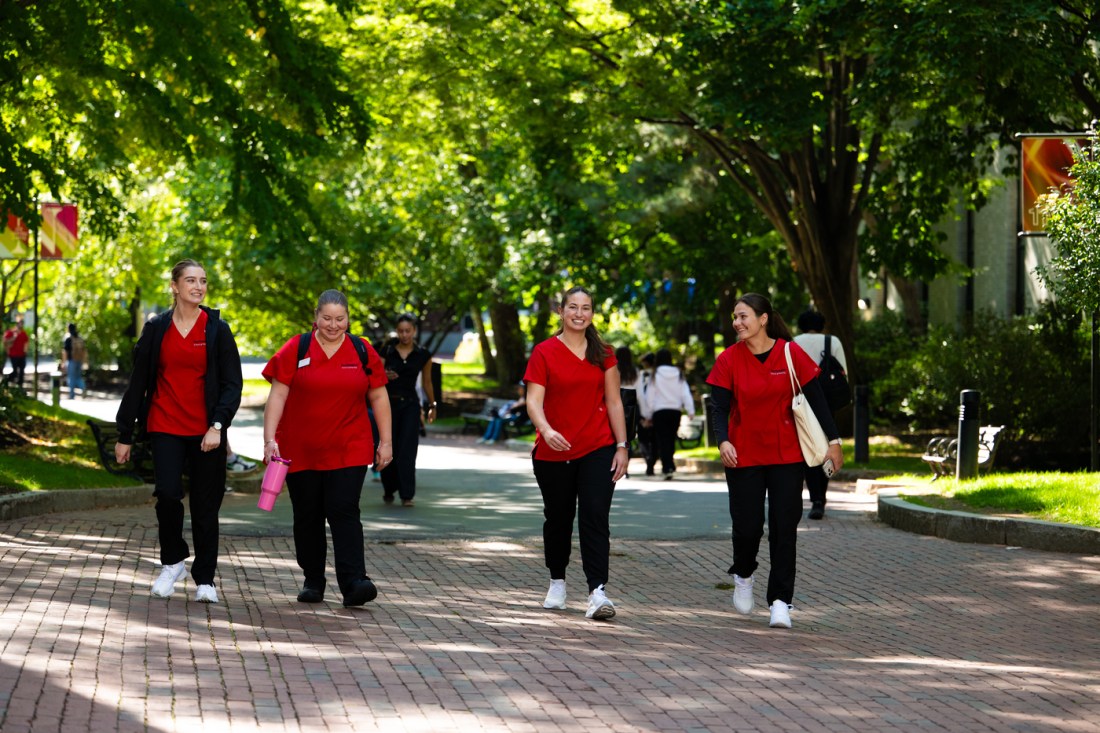
Dana-Farber will appoint Ph.D.-trained nurses and researchers from its Phyllis F. Cantor Center for Research in Nursing and Patient Care Services to tenure-track roles at Northeastern.
“This new, innovative collaboration increases our ability to train the next generation of nurses,” said Anne Gross, senior vice president for Nursing and Patient Care Services, chief nursing officer and the Ning Zhao Chair of Nursing at Dana-Farber. “Importantly, we’re training nurses who can arrive at the bedside with specialized knowledge and clinical readiness.”
These faculty members will have access to Northeastern’s academic resources, including technology, artificial intelligence and grant support. In return, the university will expand its capacity to train nurses and accelerate their readiness for oncology practice.
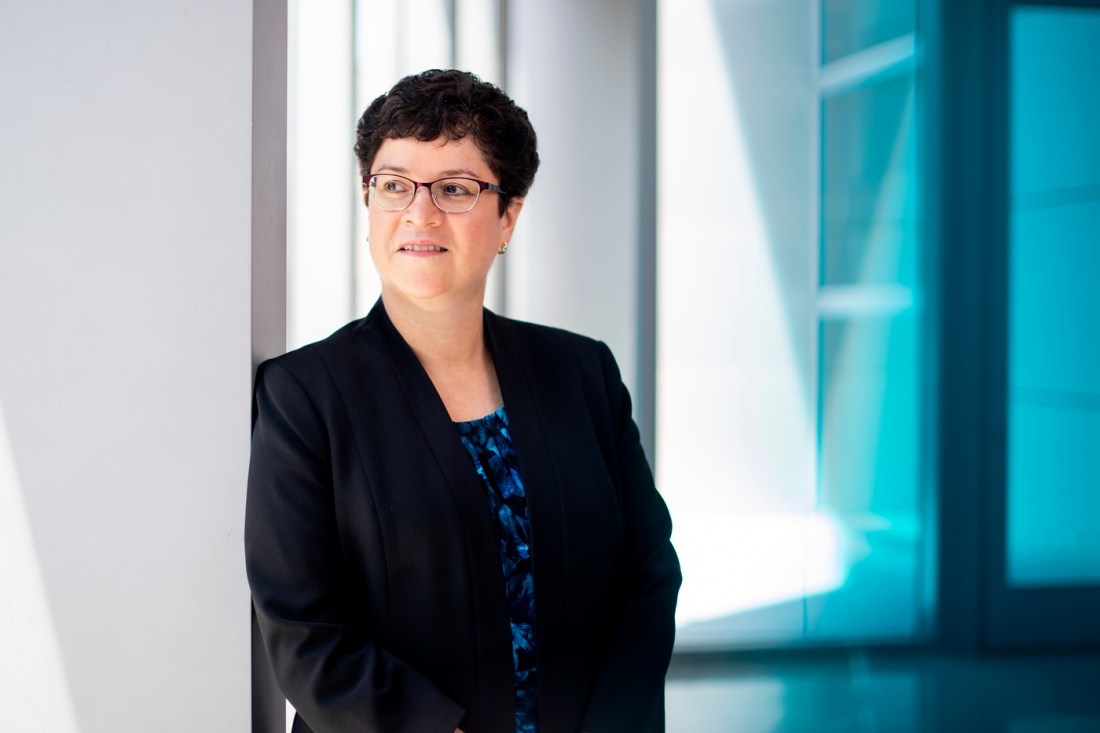
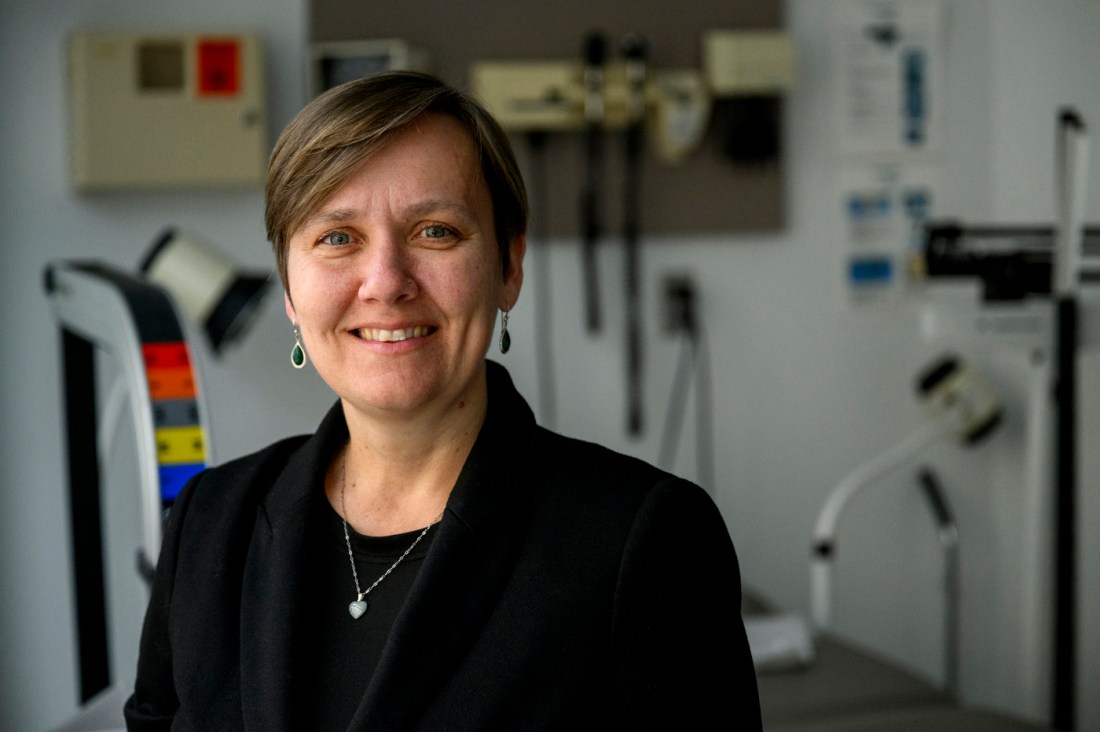
Already, Dana-Farber’s Marilyn Hammer, director of the Cantor Center, has become a professor at Northeastern. Rachel Pozzar, associate director of the center’s Bioinformatics and Technology Core within the Precision Health Symptom Science Program, has joined Northeastern as an associate professor. Two more nurse scientists are expected to follow.
The appointments are part of an integrated oncology curriculum designed to prepare students earlier for the complexities of cancer care. Joint research areas include symptom science, quality of life, cancer disparities, and development of screening tools and targeted interventions, with a focus on underserved and historically marginalized populations.
Editor’s Picks


“This exciting new chapter builds on the strong partnership between Dana-Farber and Northeastern University, creating innovative opportunities to train the next generation of nurses and advance nursing science and practice. Together, we are preparing clinicians who will arrive at the bedside with both specialized knowledge and true clinical readiness, exemplifying our common vision to forge a path toward groundbreaking research and enhanced patient care,” said Dr. Benjamin L. Ebert, president and CEO of Dana-Farber.
The partnership also includes shared mentorship for Ph.D. students, collaboration on academic publications and research funding, and career development programs. Dana-Farber nurses will serve as clinical faculty, while Northeastern students and researchers will gain access to Dana-Farber’s clinical and simulation environments.
The two institutions already share a strong employment pipeline. In 2024, Dana-Farber’s Oncology Nurse Residency Program received over 100 applications, many from Northeastern students and graduates. The program added seven residents this month to the 45 residents who have completed the program since its inception in 2016. Of those, 94% were hired and all remained on staff after two years.
The goal is to align academic preparation with clinical needs and reduce onboarding time for new graduates. Dana-Farber’s simulation center will continue supporting oncology training.
“This partnership unites two institutions committed to innovation, excellence, and impact,” said Amanda Choflet, dean of Northeastern’s School of Nursing. “We’re not just responding to a national nursing crisis — we’re setting a new standard for academic-clinical collaboration to strengthen the profession, accelerate research and improve patient outcomes.”