From mealtime therapy to dance parties, a summer at a Vermont camp gave them skills to shape a career
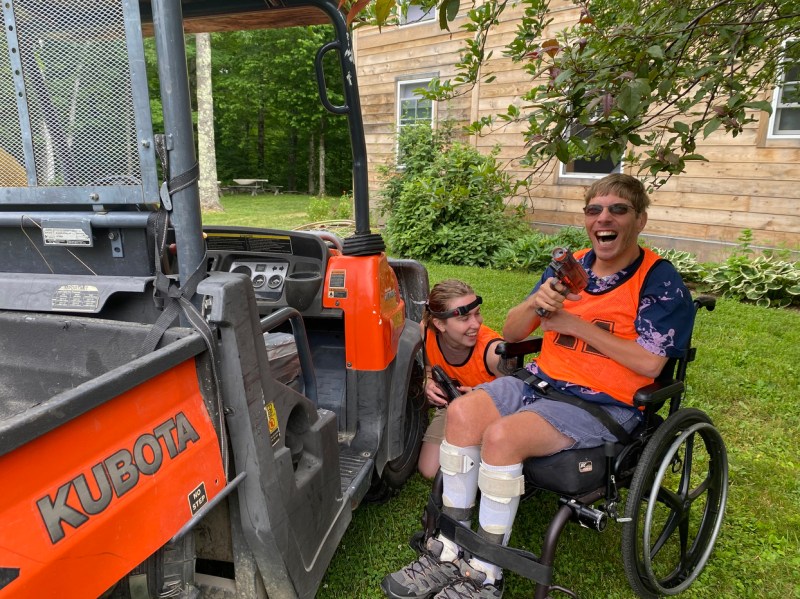
Assistant professor Kim Ho brought several SLP students to Zeno Mountain Farm this summer, a camp for people with different abilities.


Like many other speech language pathology students at Northeastern University, Rita Khoury has a good amount of clinical experience. Before this summer, she’d worked with 50 middle and high school students with a range of communication needs.
But working at Zeno Mountain Farm in Vermont this summer, thanks to a partnership through a Northeastern professor, gave her a whole new set of skills and experiences as she worked with people with different communication needs in a new setting.
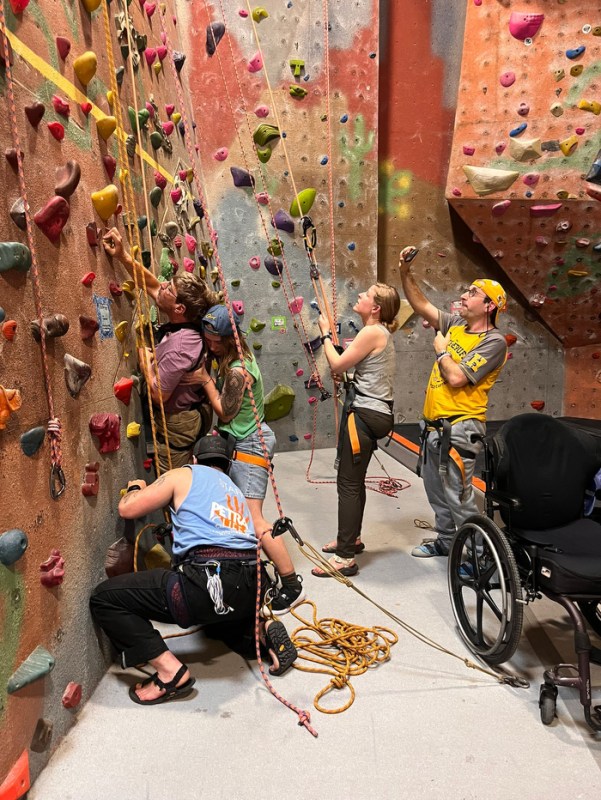
Instead of working on interventions during structured, timed, goal-focused sessions like in a school or clinic, Zeno gave Khoury the chance to work with people with different communication needs in a real-life setting. She helped someone advocate for their turn in the shower, programmed lines for a play into an augmentative and alternative communication device, and learned how to adapt if an AAC device died.
“At Zeno, I had the chance to experience what it looks like when communication isn’t confined to a therapy room,” Khoury says. “It pushed me to think about communication as something fluid, relational and constantly evolving, rather than a set of discrete skills practiced in isolation. What I truly valued the most was how naturalistic the environment was. There was no ‘pulling a client out’ for therapy. Instead, I learned how to embed communication strategies in authentic, meaningful moments throughout the day.”

The experience helped shift Towne’s perspective on her work, one of the benefits of the partnership between Zeno and Northeastern, courtesy of Kim Ho, assistant clinical professor of communication sciences and disorders.
“The Zeno experience is a unique way to really help prepare professionals who are going into any kind of health care,” Ho says. “A lot of students are attracted to the camp and they come just because they’re learning how to provide care and support for someone with disabilities in a way that’s extremely respectful.”
Ho, who also works with Camp Jabberwocky on Martha’s Vineyard, has a longstanding relationship with Zeno Mountain Farm, which was founded 16 years after Camp Jabberwocky. It’s also a free camp for people with disabilities to attend for two weeks, but it is built on a slightly different model.
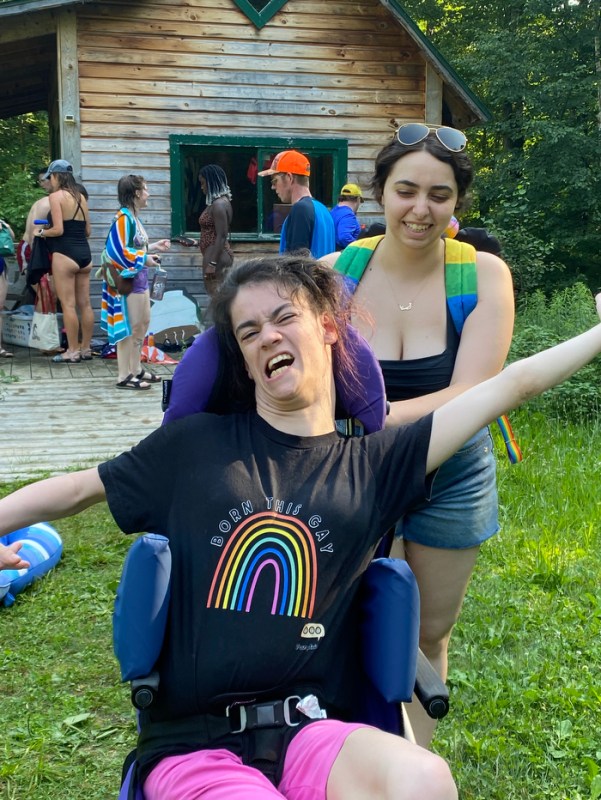
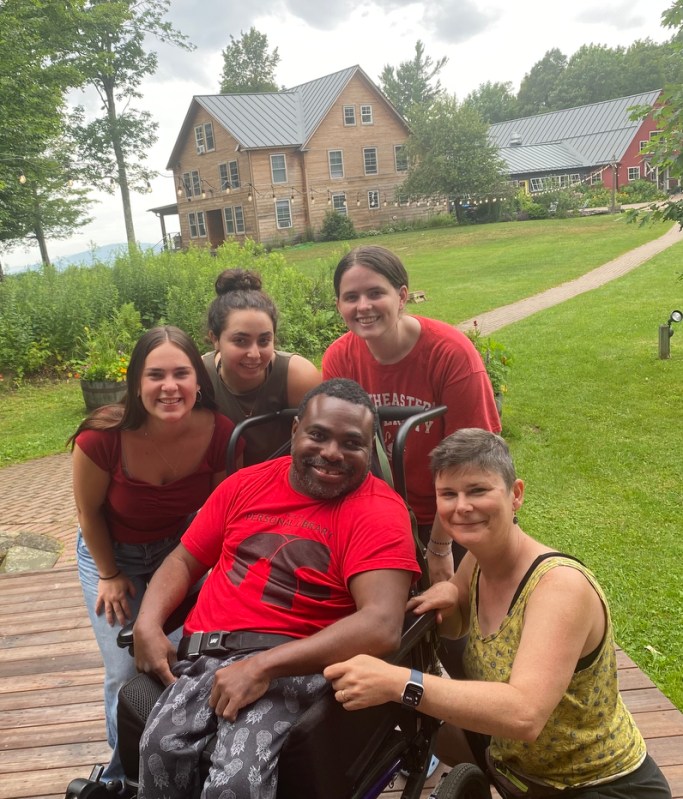
Zeno Mountain Farm runs year-round, offering campers activities such as swimming, performing and skiing on its 60-acre campus in the mountains of Vermont. The campus, located in the town of Lincoln, has a pond, sauna house and a barn that’s been repurposed into an accessible theater. They host camps for people with traumatic brain injuries, wounded veterans and people with rare medical conditions.
There are also no labels at the camp. Instead of having “staff” and “campers,” everyone is simply considered a participant, removing social hierarchies from the environment. People don’t assist each other without getting consent, and campers make their own choices when it comes to what they want to do.
“At Zeno, there’s no titles,” says Ho. “Everybody just goes and participates. Everybody has a contribution. It’s a community. It’s a lifelong friendship. Our job as a friend is to just empower them to do what they want to do. It’s a completely different mindset.”
Ho wanted to bring some of her SLP students to Zeno to experience this model where they would be working side-by-side with people with disabilities. She brought three graduate and two undergraduate students there for the first time this summer, with each of them working there for two weeks at a time.
“What drew me to Zeno was its philosophy of inclusion and community,” says Khoury. “Unlike traditional placements, Zeno isn’t just about delivering therapy in a structured environment; it’s about living, working and celebrating alongside individuals of all abilities. I was really interested in the idea that intervention and communication support don’t just happen in a clinic or classroom, but in daily routines like mealtimes, group activities, or even dance parties. The camp’s emphasis on relationships and authentic community mirrored what I believe is at the heart of speech-language pathology which is building meaningful connections and honoring each person’s voice.”
Editor’s Picks



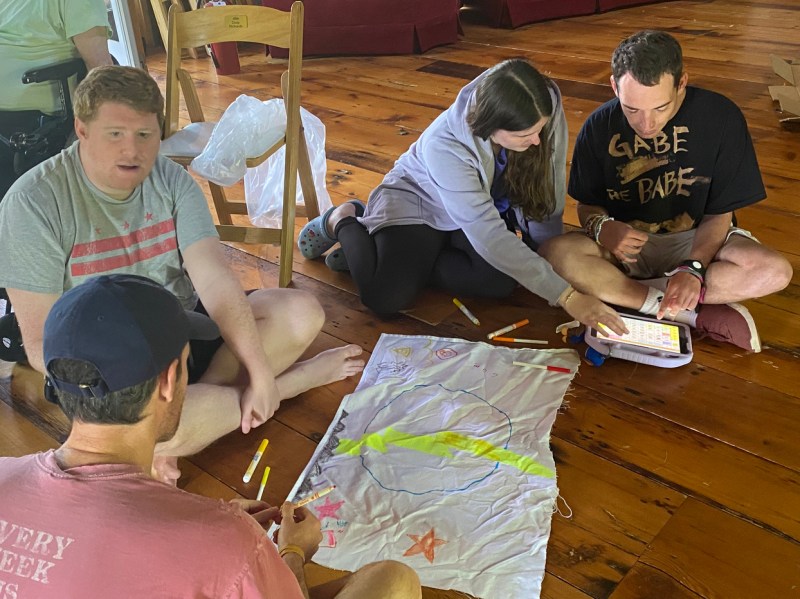
Throughout the summer, campers worked on the annual Fourth of July parade (with TV sitcom-themed floats) and summer play. There was mud wrestling and a cardboard boat regatta in which participants made a load-bearing boat out of cardboard, duct tape and a trash bag. Campers also shared meals together and took classes focused on dance, yoga and art.
Campers also have the freedom to decide what types of activities they want to do. Julia Towne, another second-year speech language pathology graduate student, went to movies, went down a homemade water slide, and grabbed ice cream with other campers while there, incorporating different therapies and assistance along the way when necessary.
“It’s definitely different in that you do the therapy in a natural environment,” she says. “For example, me and one of the people I was hanging out with at camp, we really wanted ice cream. So we went out to get creamies and we did feeding therapy, just eating ice cream. (It was getting to) build a bond over more preferred activities.”
Through the Zeno experience, both Khoury and Towne say they picked up new skills to take with them into their career, such as navigating and troubleshooting AAC devices and getting more comfortable working with G-tube feeding.
“It definitely has made me better just by recognizing when to take a back seat,” Towne says. “Now I’m at my private practice that’s also neurodiversity affirming and sometimes it’s just about watching the kids play and sitting back and I think I got the foundations for that from Zeno and being in that natural environment and with such a wide variety of people and their disabilities. I learned so much from all of them, and I’ve been implementing that knowledge in my classes and in my placement.”