Can you get a lower mortgage rate today? Don’t bet on it
The Federal Reserve cut the Federal Funds Rate by a quarter-point on Wednesday, lowering the short-term rate to about 4.1%, down from 4.3%. Northeastern economist explains

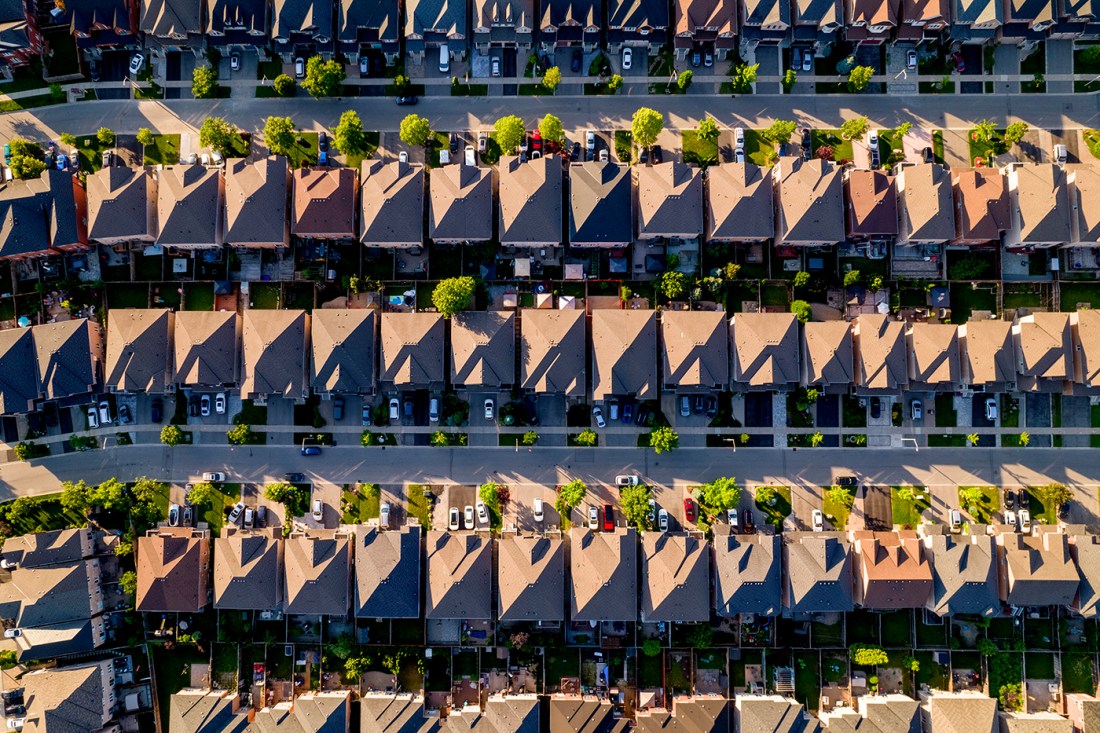
The Federal Reserve cut its key interest rate on Wednesday. Is now the time for eager homebuyers to take out a mortgage?
Not necessarily, Northeastern economist Bob Triest says.
“The cut yesterday will have essentially no effect,” says Triest, professor of economics at Northeastern. “But in combination with cuts to come, the anticipation of which will have an effect on the bond market, and will likely result in mortgage interest rates dropping.”
The Federal Reserve cut the Federal Funds Rate by a quarter-point on Wednesday, lowering the short-term rate to about 4.1%, down from 4.3%. It was the first change to interest rates in nine months, as the Fed weighed the impact of tariffs, budget policies and tighter immigration enforcement on inflation and the economy.
President Donald Trump has called for the Fed to cut rates dramatically to encourage home buying.
“People aren’t able to buy a house,” Trump said in the Oval Office in July, referring to the Federal Reserve and the reluctance of Fed Chair Jerome Powell to lower the key interest rate.
But the Federal Funds Rate — which is the rate that banks use to lend each other money overnight — is not directly tied to mortgage rates, Triest noted, so mortgage rates will not likely come down immediately.

But perhaps more important than the Fed’s cut on Wednesday was the Fed’s forecasting of its long-term trajectory, Triest says.
The Fed indicated that it would likely make two additional cuts this year and it would result in a combined reduction of .50 basis points. Furthermore, the Fed forecasted a goal to bring the Federal Funds Rate to 3%.
“That type of reduction will be enough to substantially lower mortgage interest rates,” Triest says.
Editor’s Picks


But is that type of reduction assured?
Again, not necessarily.
The Fed is threading a difficult needle, lowering interest rates to boost the economy and strengthen a weak labor market, but doing so while inflation remains above its 2% goal and is moving in the wrong direction.
“By moving to shore up the economy, the Fed is putting less emphasis on bringing down inflation than it has been in the recent past,” Triest notes. “So that might spark a fear of higher future inflation that will tend to push up longer-term interest rates like the 30-year mortgage rate.”
Adding in the potential inflationary pressures of tariffs further complicates the picture, as does what Triest calls “the path of fiscal deficits,” likely from passage of The Big Beautiful Bill Act.
“That act has resulted in projections of increased public debt relative to Gross Domestic Product and that will tend to push up the cost of government borrowing — potentially pushing up interest rates,” Triest says.
Still, Triest expects that although Wednesday’s cut may not move mortgage rates much, it’s a step in the right direction.
“I expect that before the end of 2025, we’ll see mortgage rates drop measurably,” Triest says. “How much, I don’t know.”


