Democrats and Republicans disapprove of Medicare, Medicaid cuts, Northeastern research finds
Northeastern’s Civic Health and Institutions Project (CHIP50) surveyed more than 33,000 adults across the country and found that 68% of Americans disapprove of cuts to Medicaid and 76% disapprove of cuts to Medicare.

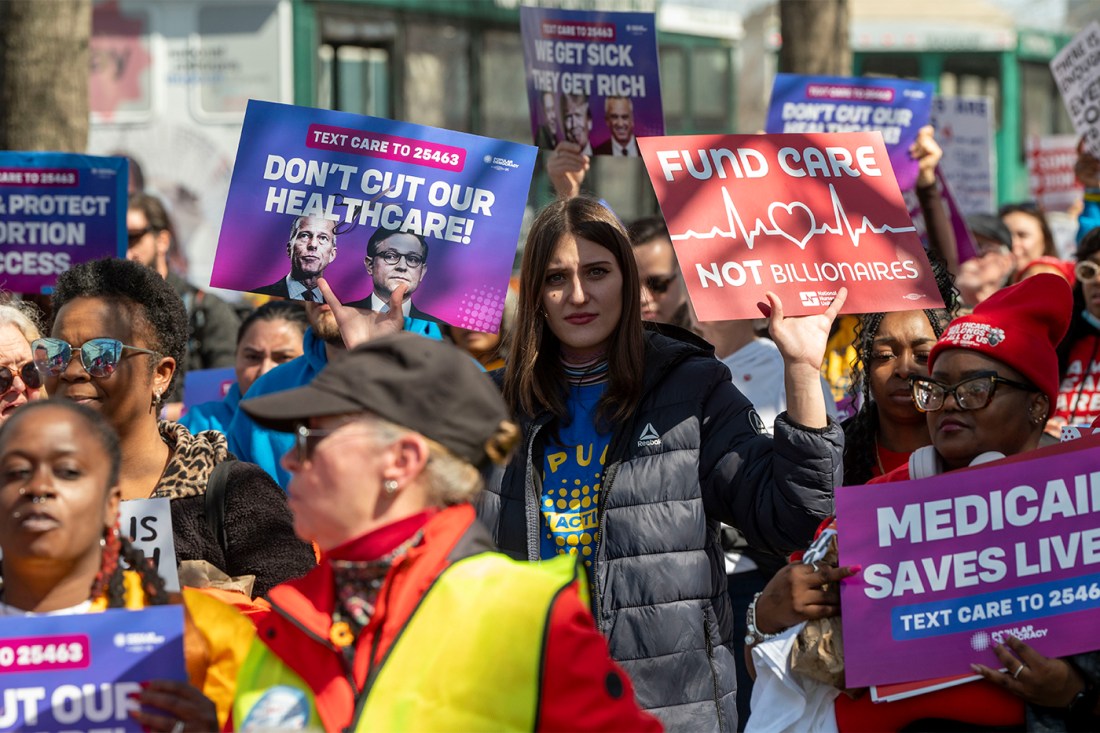
Most Americans disapprove of cuts to federal Medicare and Medicaid programs, a Northeastern University survey finds, including a majority of both Democratic and Republican voters.
Conducted from April to June by Northeastern’s Civic Health and Institutions Project (CHIP50), the survey of more than 33,000 adults across the country finds that 68% of Americans disapprove of cuts to Medicaid and 76% disapprove of cuts to Medicare.
Broken down by political affiliation, 86% of Democrats and 64% of Republicans disapprove of cuts to Medicare. Eighty-two percent of Democrats and 51% of Republicans disapprove of cuts to Medicaid.
“We talk about partisan polarization, and there are big partisan differences,” says David Lazer, University Distinguished Professor of Political Science and Computer Sciences and principal investigator at CHIP50. “But the majorities of Democrats and Republicans are on the same side of this issue. It wasn’t inevitable that that was the case.”
Details about the survey findings are available on the CHIP50 website.

Medicare supports health care for people 65 years of age and older, while Medicaid eligibility is determined by an income threshold that varies from state to state.
Nationwide, people most likely to be affected by spending cuts are also most likely to disapprove of them, the survey finds. Seventy-six percent of people who earn between $25,000 and $50,000 strongly disapprove of cuts to Medicaid, compared to 59% of people who earn $100,000 or more.
Editor’s Picks


Similarly, 89% of people age 65 and older strongly disapprove of cuts to Medicare while 66% of people ages 18 to 24 hold the same view.
Americans with less formal education were also more likely to strongly disapprove of the cuts to federal health care spending. Forty-nine percent of people with some high school or less disapprove of cuts to Medicaid, compared to 38% of people with a graduate degree.
Broken down by state, the survey found a range of opposition to Medicare cuts. West Virginians are the most strongly opposed, according to the survey, with more than 85% of respondents expressing disapproval. At the other end of the spectrum, 70% of Floridians expressed disapproval.
Voters in West Virginia tend to be lower-income and more reliant on Medicare, says Lazer, noting the state tends to favor the Republican Party. Florida, which is also heavily Republican but more affluent, has the lowest level of disapproval.
“There are a lot of old people in West Virginia,” he says, “but they’re not the same old people who moved to Florida.”
Overall, Lazer says, the survey found that all groups — broken down by age, income, political affiliation, gender and race — disapprove of cuts to federal health care spending.
“Vast majorities oppose cuts,” he says. “Even vast majorities of Republicans disapprove of cuts. But I think the bottom line is we couldn’t find any group who approved of (cuts).”