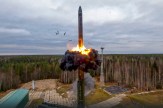
Putin’s word is ‘totally unreliable,’ expert says ahead of Trump-Putin summit
A sit-down between Donald Trump and Vladimir Putin would be the first meeting between the countries’ heads since 2022.

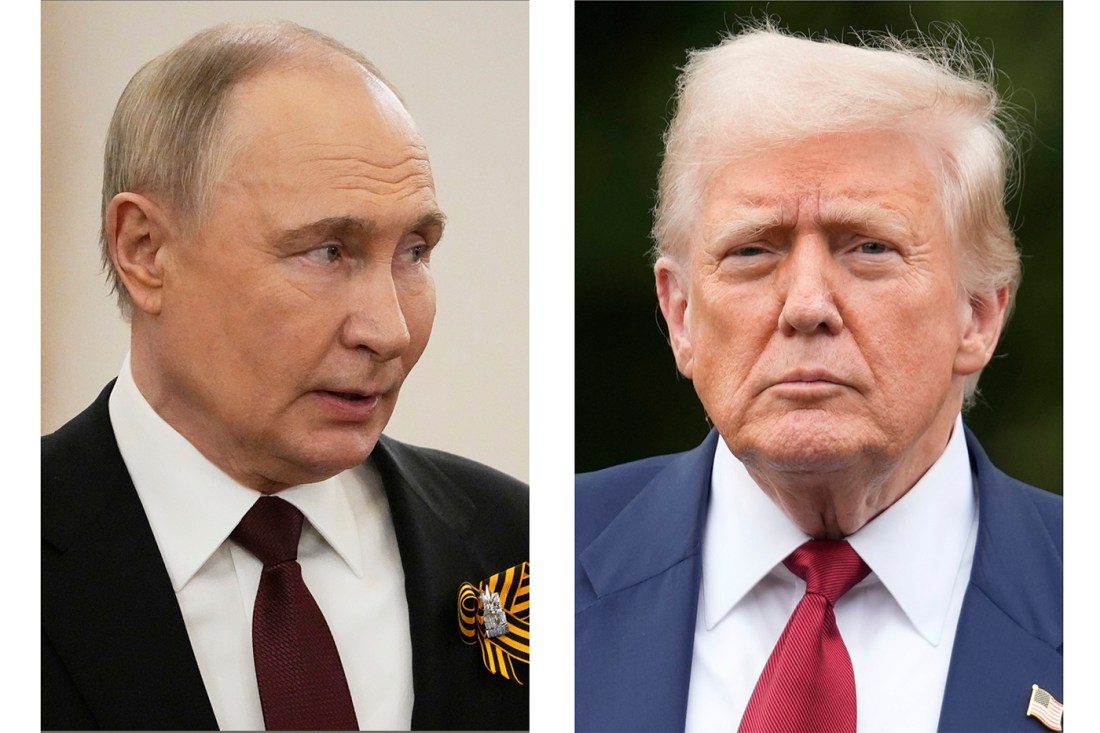
A sit-down between U.S. President Donald Trump and Russian President Vladimir Putin would be the first meeting between the two countries’ heads of state since the war in Ukraine began in 2022.
“In that sense, it could be quite a big deal,” says Mai’a Cross, dean’s professor of political science, international affairs and diplomacy.
The New York Times reports that Trump intends to meet with Putin “as early as next week,” and then separately meet with President Volodymyr Zelenskyy of Ukraine in an apparent bid to negotiate an end to the more than three-year-old war.
“It does seem like they’re holding their cards pretty close to the vest in terms of what possible terms there could be,” Cross says.
Before Putin’s invasion of Ukraine on Feb. 24, 2022, bilateral meetings between Russia and the United States were a regular occurrence, but Russia’s annexation of Crimea in 2014 increased tension between the two superpowers. When Russia launched its full-scale invasion of Ukraine, communication between the two countries became especially strained — and there have been no direct meetings between either President Joe Biden or Donald Trump and Putin since.
The challenge now, according to Cross, is that Putin has proven to be untrustworthy — and Trump unpredictable.
“I would also just point to the track record here, which is that you really can’t trust that there will be some kind of diplomatic breakthrough because Putin is totally unreliable at this point,” she says.
A series of peace talks began this year between Zelenskyy and Putin, achieving some limited common ground. While the talks led to a series of prisoner exchanges and other humanitarian agreements, they ultimately preceded a major escalation in the war, Cross says. Russia launched intensified attacks in eastern and southern Ukraine, and Ukraine responded with expanded drone and missile strikes on Russian infrastructure, including oil refineries and military airfields deep inside Russia.
In order to put an end to the war, Cross says that all of the relevant stakeholders need to come to the table — including the Europeans, who have been excluded from the tentative plans.
Editor’s Picks





“What does stand out to me,” she says, “is there is no mention of the [European Union] in these talks, and the EU is the largest funder of this war, as the U.S. has basically stopped.”
European Union countries — particularly Germany, Poland and the Netherlands — have been purchasing U.S.-made weapons systems to support Ukraine’s defense.
On paper, the potential meeting between Trump and Putin — if it happens — doesn’t inspire confidence for a number of reasons.
“I don’t think there’s much to suggest that this could finally be that breakthrough — although you never know because of the personalities involved,” Cross says.
She continues: “We saw this very publicly with his meeting at the White House with Zelenskyy. Even if this meeting is private, there’s no telling how things might evolve or devolve throughout the course of that meeting. Something could trigger Trump’s frustration, and he’s clearly more frustrated with Putin than he was in the beginning — and he does have pressure from the EU not to give Putin whatever he wants.”
Though Russia and the U.S. appeared on track for a reset in relations at the start of the second Trump presidency, Trump has grown increasingly frustrated with Putin.
And that frustration has made itself evident in recent days. Putin’s escalation in the war prompted warnings from Trump that he would impose heavy economic sanctions on Russia and tariffs on its trading partners.
“That frustration could tip over into some sort of meltdown in an in-person meeting,” Cross says. “But it also could go the other way if Putin manages to flatter him in all the right ways.”
There was always the risk that “relationships could sour” between the two men. But at some point, Cross says, effective diplomacy requires that the key players come to the negotiating table — and security guarantees to ensure peace.
“Something this complex, where you can’t actually trust Russia, requires very well-specified and detailed agreements, with protections against defaulting or reneging on diplomacy,” Cross says. “It has to be really detailed and negotiated line by line.
She continues: “So, if you don’t have the Europeans there — if you don’t have the EU — how will you have some sort of security guarantee? You won’t know what the Europeans would be willing to do based on any theoretical terms of such an agreement.”
What’s more, Cross says that Trump’s dealmaking approach to international relationships — which the president has qualified before as part “gut feeling” — is “inherently flawed” and “incompatible” with a circumstance like this.
“He can do it more with these unilateral tariffs, but something like this — to end a war, where the key instigator is unreliable — is quite tricky,” she says.