How should we remember Hulk Hogan? His legacy extends far beyond the ring
Hogan was a centerpiece of wrestling, but also had many scandals during his time, leaving a complicated reckoning for fans, said one Northeastern expert.

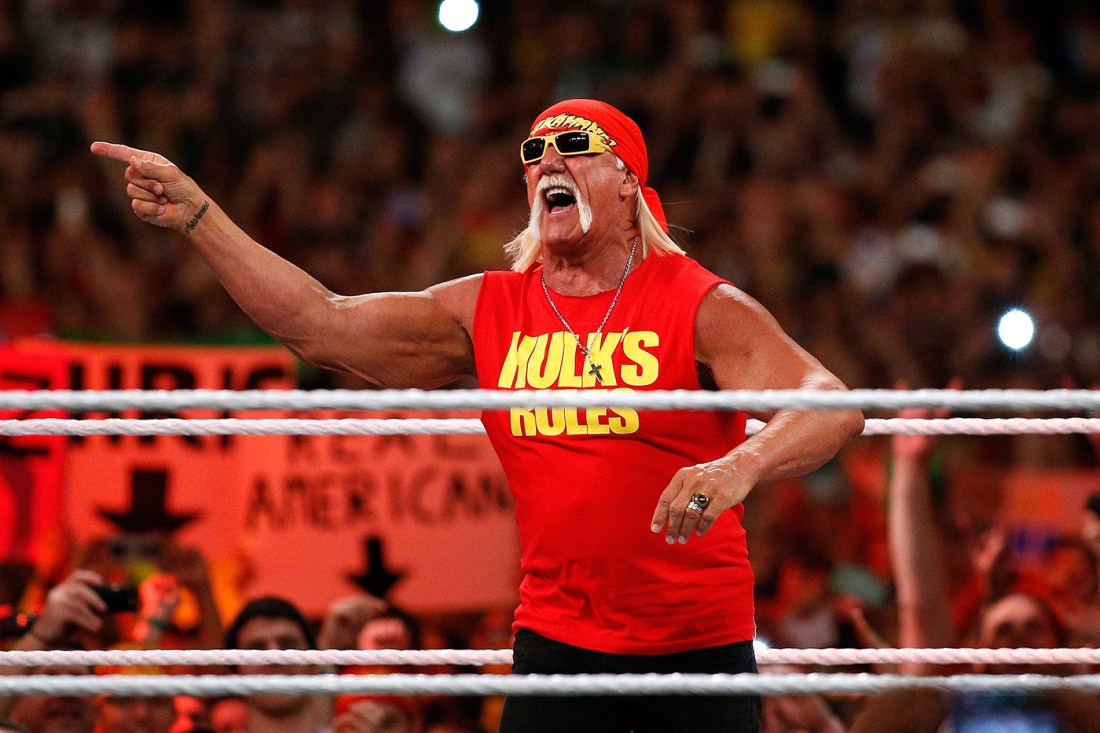
Hulk Hogan died at age 71 on Thursday, leaving behind a complicated legacy for fans.
Hogan transformed professional wrestling with a larger-than-life persona that Northeastern University communication studies teaching professor Steve Granelli called “unbelievably charismatic,” making him one of the most notable names in the industry.
However, in his later years, Hogan courted controversy in his personal life, from a 2015 tape of him using racial slurs to an admission of steroids use.
“He was a character that was pretty much a cartoon superhero come to life,” said Granelli, who wrote his dissertation on professional wrestling. “If you were to stop somebody on the street and say ‘name a professional wrestler,’ they would probably say Hulk Hogan. But then there was the man who was portraying the character and over time fans have tried to figure out how to separate the character from the person.”
Hogan, born Terry Gene Bollea, began wrestling in 1977. Two years later, he made it to the World Wrestling Federation — now World Wrestling Entertainment — where he took on the name Hulk Hogan. He became known for his shirt-ripping, bleached-blonde mustache and catchphrases. He would often tell young fans to “train, say your prayers, and eat your vitamins.”
Granelli said Hogan was an integral part of professional wrestling becoming mainstream in the 1980s.
“He was the champion at the time,” he said. “He was unbeatable. He was invincible but vulnerable at the same. He wasn’t a great wrestler, but he was a great character and he always made you empathize, made you feel like he was in peril, no matter who he was up against. But then he would always win in the end. He had this unique ability to portray this larger-than-life character.”

Over time, Hogan developed a “crossover appeal,” Granelli said. He appeared on the cover of Sports Illustrated, in the movie “Rocky III” opposite Sylvester Stallone, and was part of collaborations with celebrities like Cyndi Lauper and Mr. T.
“That boom period in the ’80s was centered around him,” Granelli said.
Northeastern Global News, in your inbox.
Sign up for NGN’s daily newsletter for news, discovery and analysis from around the world.

Professional wrestling saw a second “boom” in the ’90s with the “Monday night wars” where two wrestling shows aired at the same time and battled it out for viewers. Granelli said Hogan was once again the center of this spike in popularity, this time portraying a more villainous character. Hogan dyed his signature facial hair black and began going by “Hollywood Hogan” to symbolize his new era.
“He was able to show both sides of the coin in wrestling,” Granelli said. “The good guy and the bad guy. He was able to do both and he did each one at a different point. He was a main driver of not just fan interest, but also industry dollars.”
But Hogan also weathered his fair share of scandals. In 2012, Gawker published a clip of a sex tape featuring Hogan and his friend’s wife. Hogan won a lawsuit in 2016 and was awarded $140 million for his privacy being violated. Hogan said the video was recorded without his knowledge.
In 2015, Hogan apologized after a tape leaked of him using racist slurs when talking about his daughter, Brooke, and her dating life. The apology seemed insincere to many fans, Granelli said.
Editor’s Picks





Hogan’s family life was a further source of controversy that played out in parts on a reality show called “Hogan Knows Best.” After the show ended in 2007, Hogan’s then-wife, Linda, filed for divorce, alleging he cheated on her multiple times, including with a friend of their daughter who was then a teenager.
Granelli said fans’ sentiments began to turn on Hogan once the internet became popular and professional wrestlers came out online to share backstage stories about the star and what he was like in real life. Over time, as more information came out publicly, the reception to Hogan cooled.
“The reckoning with it comes at different points for different people,” Granelli said. “He would still be brought out for special appearances and you could see the audience response starting to become mixed. They didn’t separate the man from the character as much anymore.
“There’s a point where you’re able to separate (the man from the character) and then there comes a point where it’s too hard. … I can’t look back and remove him because he’s so central to those moments (in professional wrestling) that it makes it hard as a fan to reckon with both.”
Hogan’s death solidifies another part of his legacy: he lived much longer than many of his colleagues in the professional wrestling world, likely due to the toll the work took on their health.
“Other wrestlers from that period died young, died poor and without a lot of fanfare,” Granelli said. “If you go back and look at who was in WrestleMania in the first nine or 10 years, a lot of them have died. (Hogan) was really an outlier to get to this point.”