The sights and sounds of Northeastern Oakland’s resident bird species
Learn about 10 of the most unique bird species on Northeastern’s Oakland campus and listen to the songs that make up its natural soundtrack.


OAKLAND – Northeastern University’s sprawling, 135-acre Oakland campus is a feast for the senses.
Overcast mornings often give way to sun-soaked afternoons, when pleasant heat rouses scents of sage, eucalyptus and fresh-cut grass that linger over the hilly, tree-dense urban oasis until evening. Melodic chimes echo from the 72-foot El Campanil bell tower every quarter hour like a sacred Om, keeping pace for students as they trek across the arboretum to their next class.
But the skies over campus also brim with dozens of colorful, chatty bird species, many of which nest permanently among the bushes and trees and emit a chorus of birdsong. Sarah Swope, Northeastern professor of biology and an avid birder, said the campus acts as a stepping-stone habitat – a place of safe refuge for migratory species during their long journeys.
“If you are from a different part of the country, or even just different parts of the state, you might hear birds that you’ve never heard before,” said Swope from her office, which is stocked with all manner of decorative avian skeletons, preserved nests and binoculars for curious students. “Go take a quiet walk, slowly, and you can really see the place come to life.”
California’s extraordinary diversity of habitat types makes it a fascinating place to observe birds, she said. The state has open ocean, interior mountains with high elevations, grasslands, chaparral and more than 800 miles of coastline, each with a different suite of species. Northeastern’s campus features a similar variety, housing coastal oak woodlands, areas of coastal scrub and transitional riparian zones along the creek that attract hawks, warblers, woodpeckers, jays and turkeys.
Scroll through the following illustrations to learn about 10 of the most unique bird species on Northeastern’s Oakland campus and listen to the songs that make up its natural soundtrack.
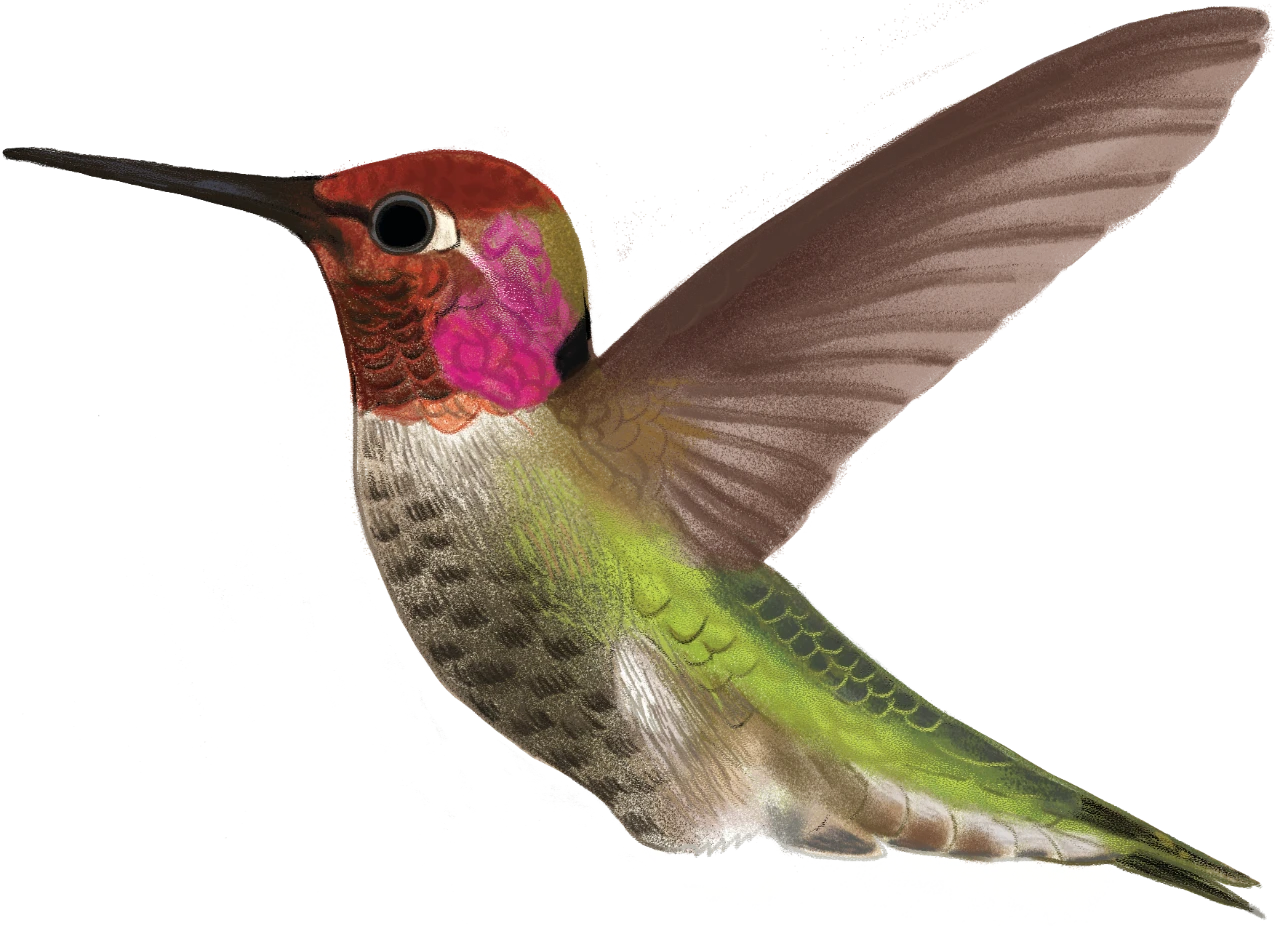

Anna’s Hummingbird
- Anna’s hummingbirds have a heart beat of about 1,200 beats per minute during flight, and about 450 beats per minute at rest.
- Because their metabolism is so high, the species must feed constantly. “They can’t even make it through the night without starving to death, so they survive by going into torpor, which is essentially hibernation,” Swope said.
- Swope said students can visit her office to feel the silky softness of one of their nests, which she keeps behind glass.
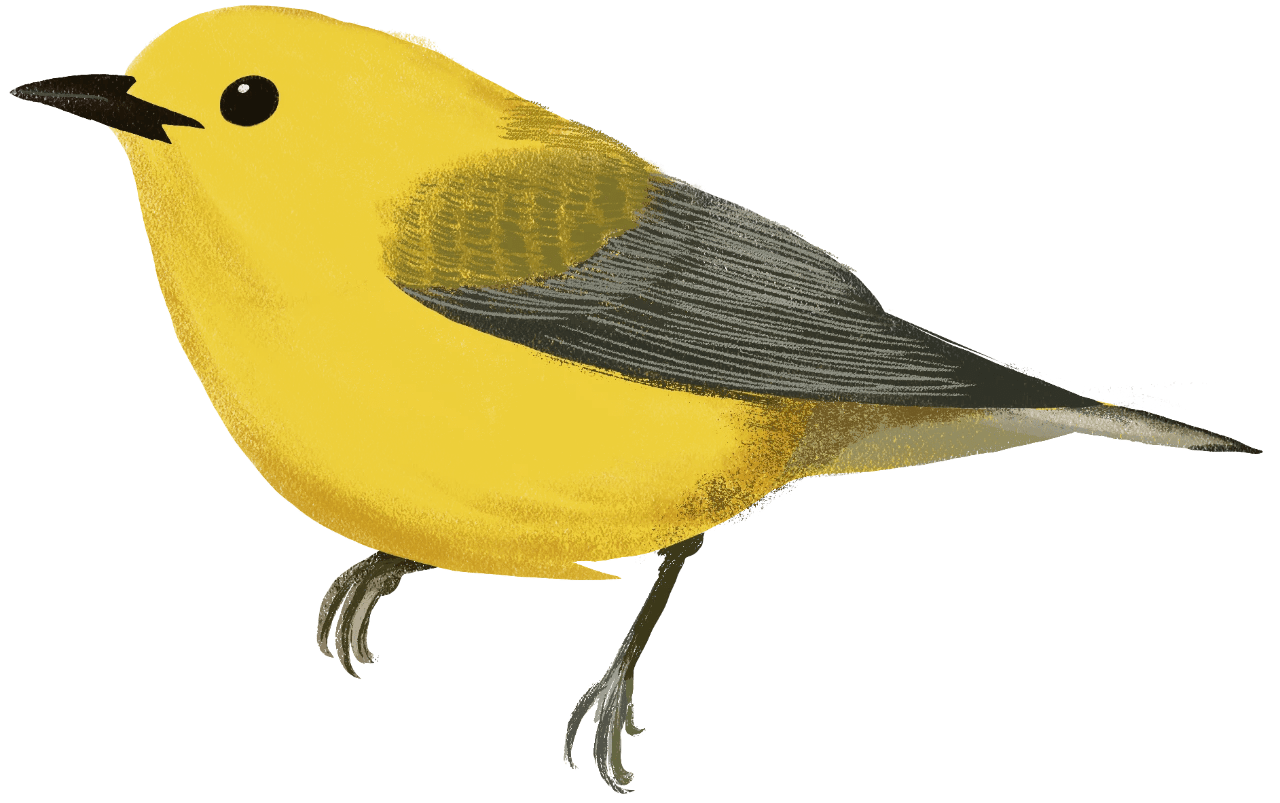
Yellow Warbler
- A rarity on Northeastern’s Oakland campus, the yellow warbler is known to make seasonal appearances in the spring and fall, Swope said. They migrate in the winter from California to the Amazon region.
- The bird’s vibrant yellow plumage makes it susceptible to predators. The odds of an adult yellow warbler surviving from one year to the next are 50% on average.
- Though yellow warblers prefer eating a diet of caterpillars, they are one of several insectivorous species that dine on coffee berry borer beetles in Costa Rica coffee plantations.
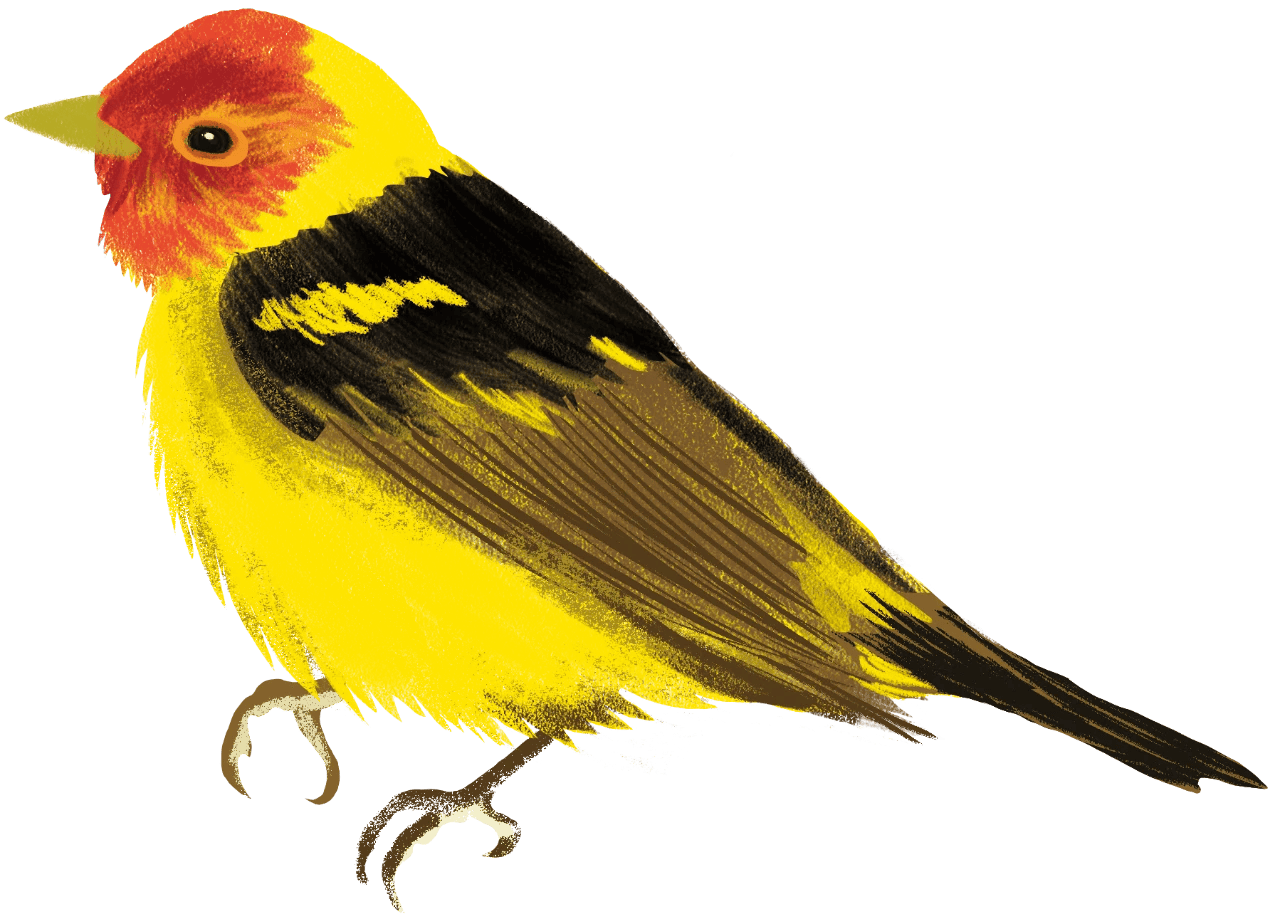
Western Tanager
- Western tanagers do not typically eat seeds, but rather prefer bird feeders with fresh oranges and other dried fruits.
- The striking red face and head of the male western tanager are caused by a rare pigment called rhodoxanthin, which is found in conifer buds, ferns and some honeysuckle species, according to the Kern Audubon Society. The western tanager indirectly absorbs the pigment by eating insects that feed on these plants.
- This species of bird, P. ludoviciana, is monotypic, which means it has no formally recognized subspecies.
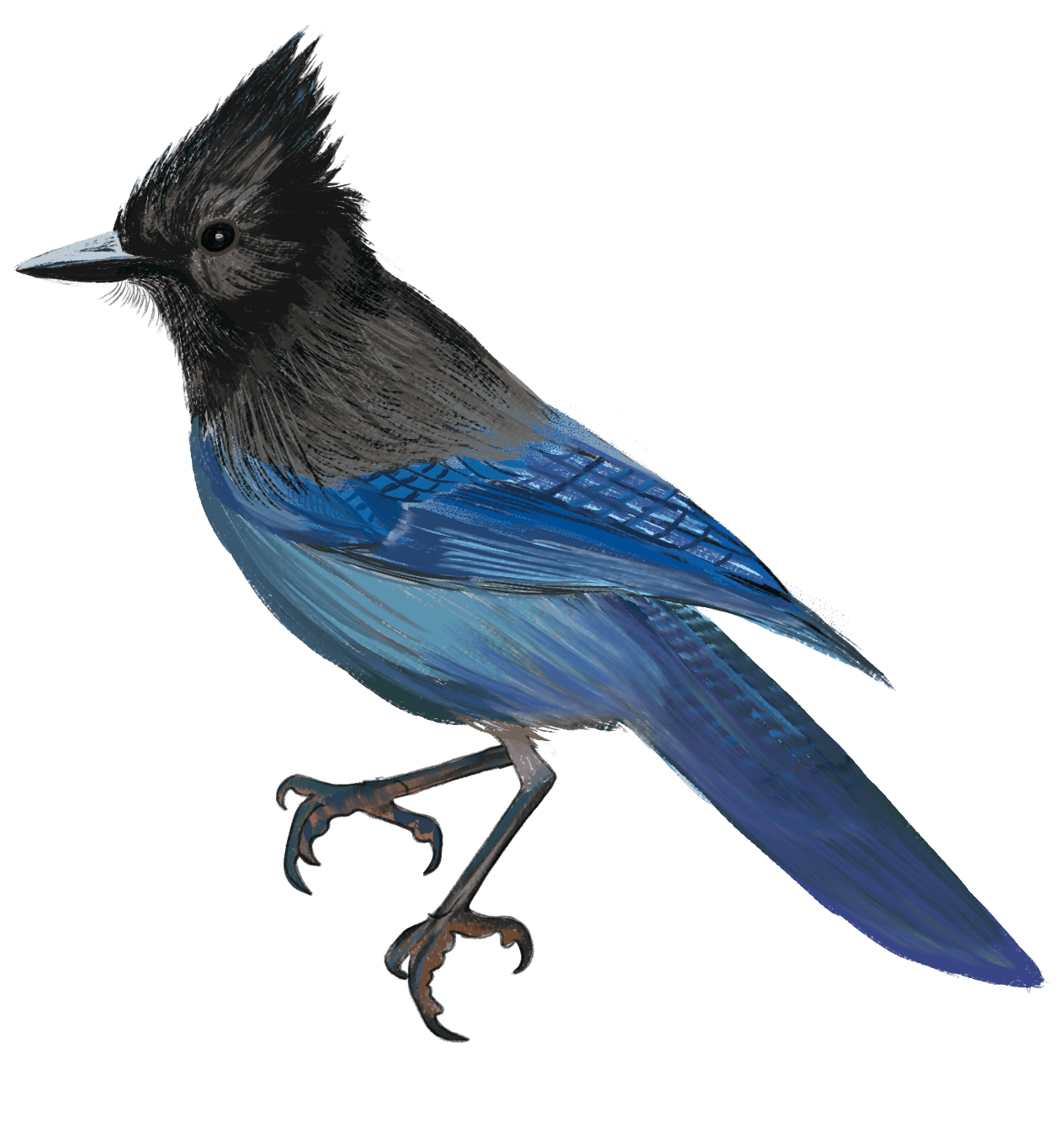
Steller’s Jay
- Part of the Corvidae family, Steller’s jays are highly intelligent and social birds with complex communication systems, according to Swope. They can mimic the vocalization of many other species, often imitating birds of prey to send rivals fleeing from their territory.
- It is the only crested jay west of the Rocky Mountains, sporting a distinct shock of dark plumage on the top of its head.
- Steller’s jays follow a monogamous mating pattern. The male forages and delivers food to the female during their clutch’s two-week incubation period.
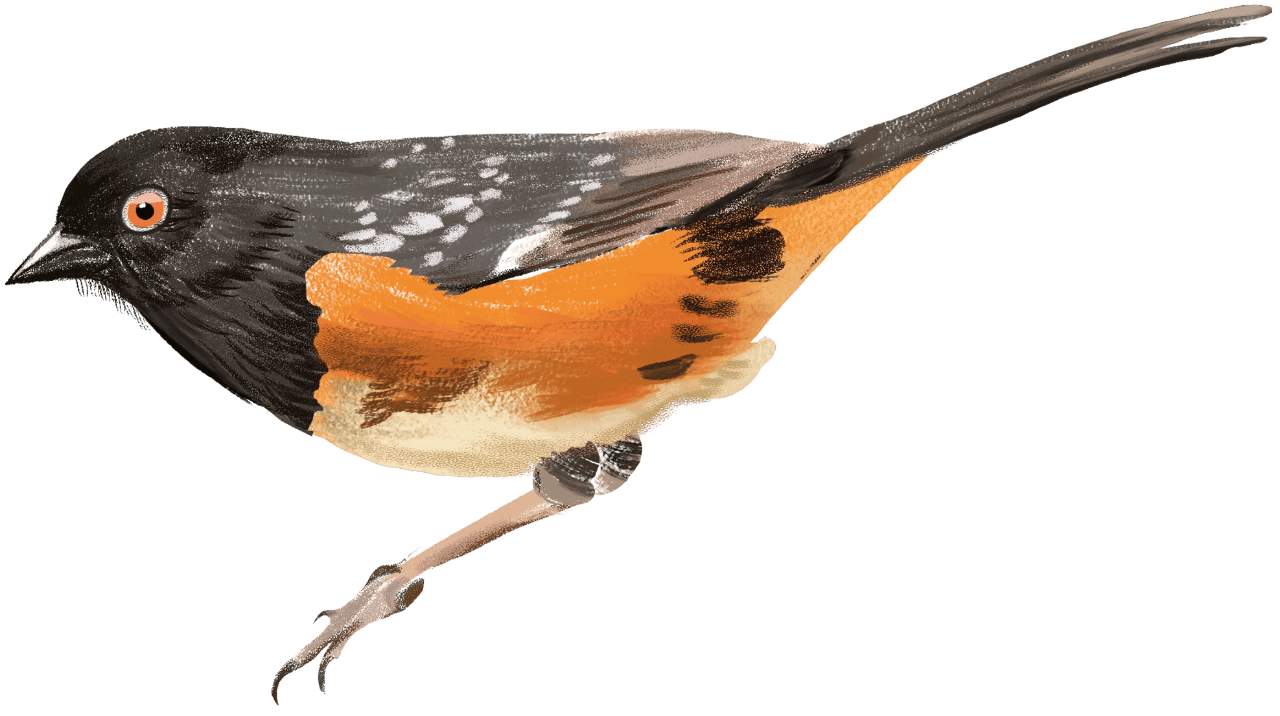
Spotted Towhee
- Female spotted towhees spend around five days building a nest, typically inside squat bushes a foot or so above the ground or directly on the earth, Swope said.
- They are known to rummage noisily through fallen leaves for seeds and berries in the fall and winter, and insects and spiders in the spring and summer.
- Spotted towhees have been found in areas across the Southwest that are recovering from wildfire burns, feasting on new plant growths as they sprout from the charred soil.
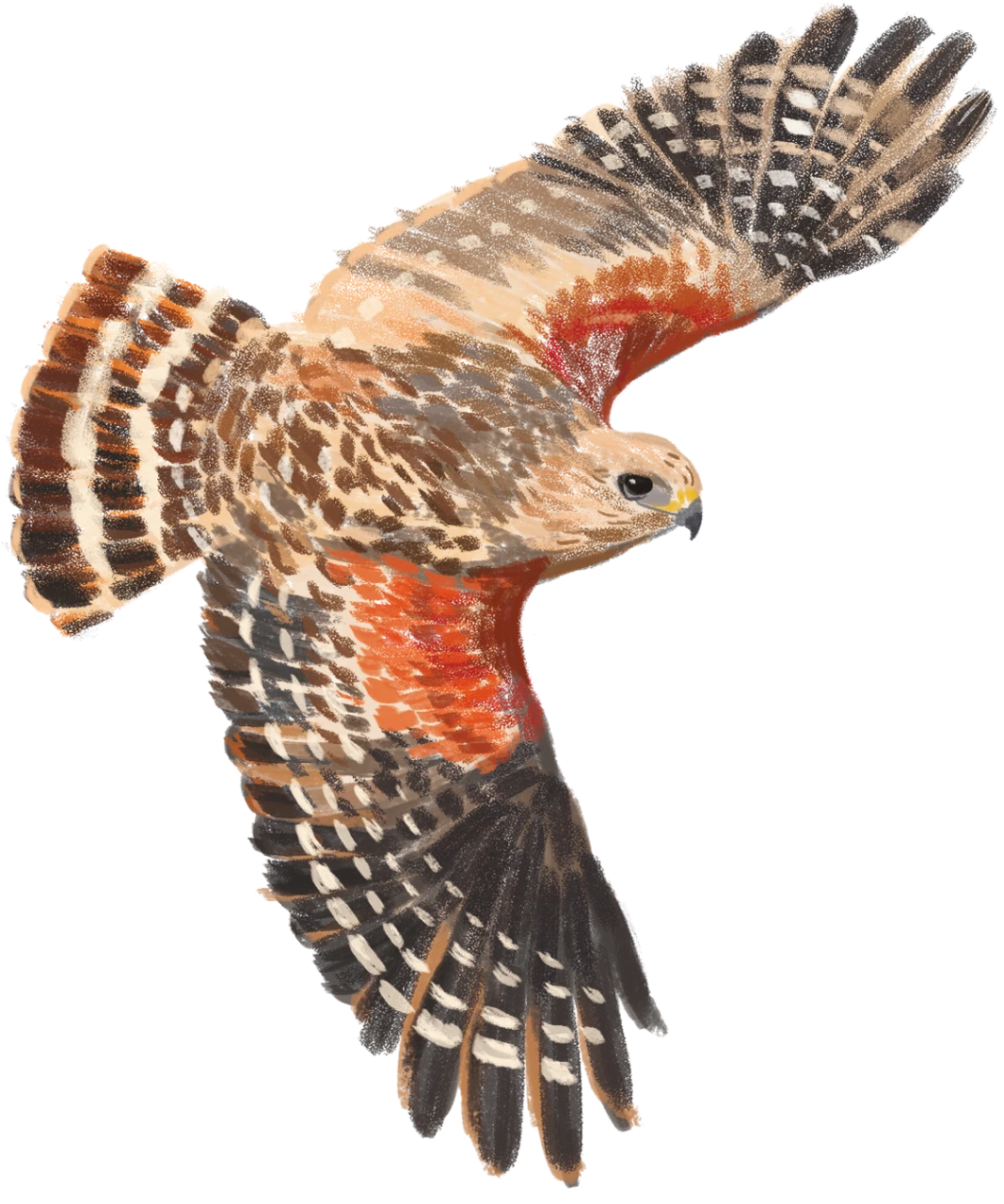
Red-Shouldered Hawk
- A pair of hawks nests on the Oakland campus in various locations, Swope said, and often can be seen flying high above the treetops searching for small mammals and other prey.
- “Red-shoulders are drop-dead gorgeous,” Swope said. “People might not think of hawks as being particularly colorful, but they are such an elegant, handsome bird.”
- Red-shouldered hawks hunt by dropping onto their prey from above with their sharp talons. They are known to sometimes store food for later consumption.
Nuttall’s Woodpecker
- Though Nuttall’s woodpeckers live almost exclusively in oak woodlands, such as those on the Oakland campus, they do not eat acorns like many of their neighbors.
- Like other woodpeckers, Nuttall’s woodpeckers perform a form of nonvocal, territorial communication, called drumming, by repeatedly striking a hard surface with their bill. Each species’ drum pattern is unique in the number of beats, length of the drum and duration of pauses in between.
- Oak trees provide a plentiful source of nutritious sap, which Nuttall’s woodpeckers consume during the colder months.
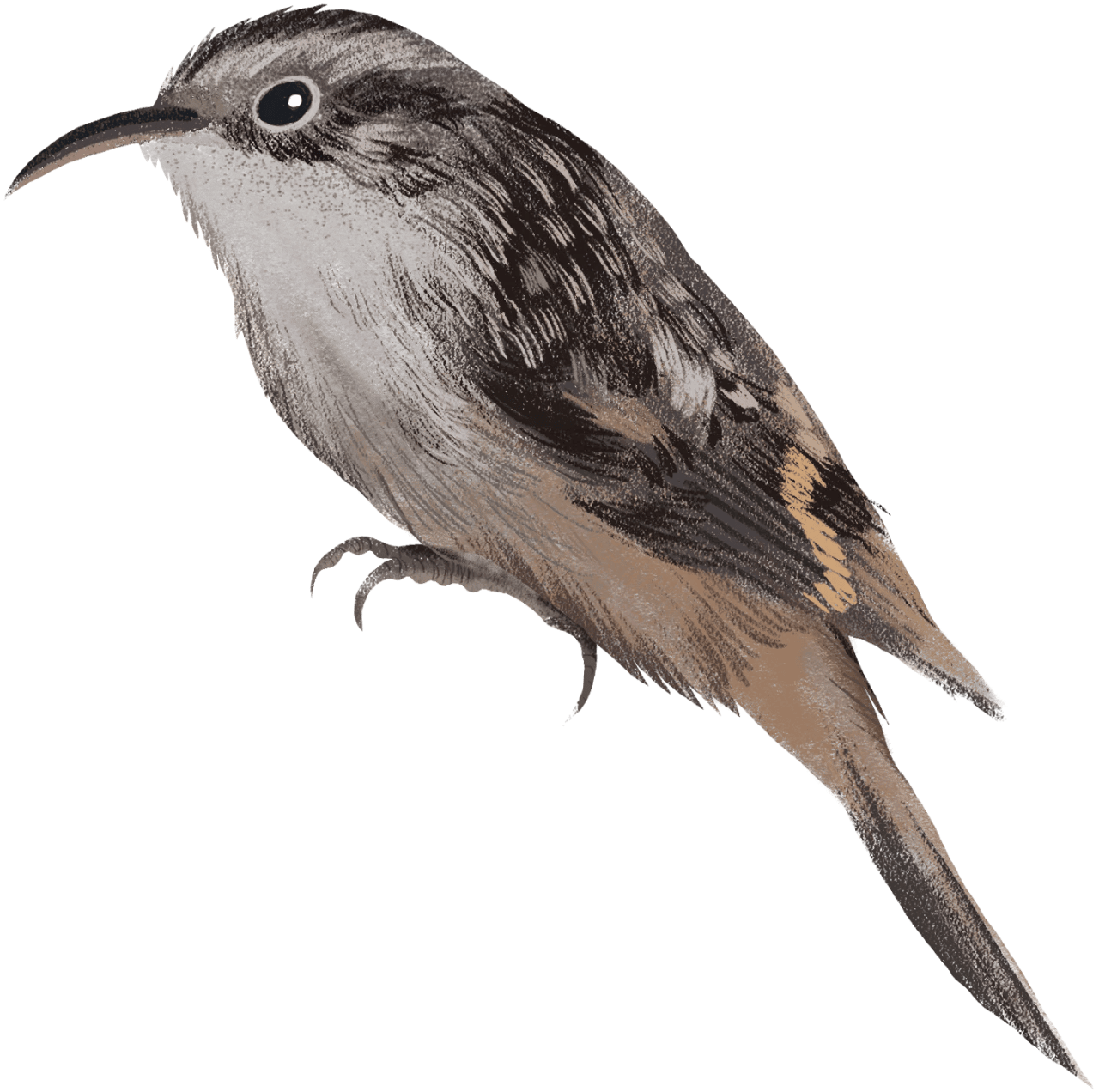
Brown Creeper
- Brown creepers have an odd habit of shimmying up tree trunks in a zigzag pattern with their bodies flattened against them, seemingly defying gravity as they probe the bark for spiders in hiding, Swope said.
- A particular group of brown creepers in Southern California’s San Bernardino Mountains sings an average of four to five more syllables than specimens that reside in other parts of the state, according to the International Journal of Avian Science.
- Unlike many birds that frequent the campus, brown creepers are not very vocal, Swope said. “They could definitely be around you, but you would never detect them – it takes a little bit more effort to see them, but it’s totally worth it.”
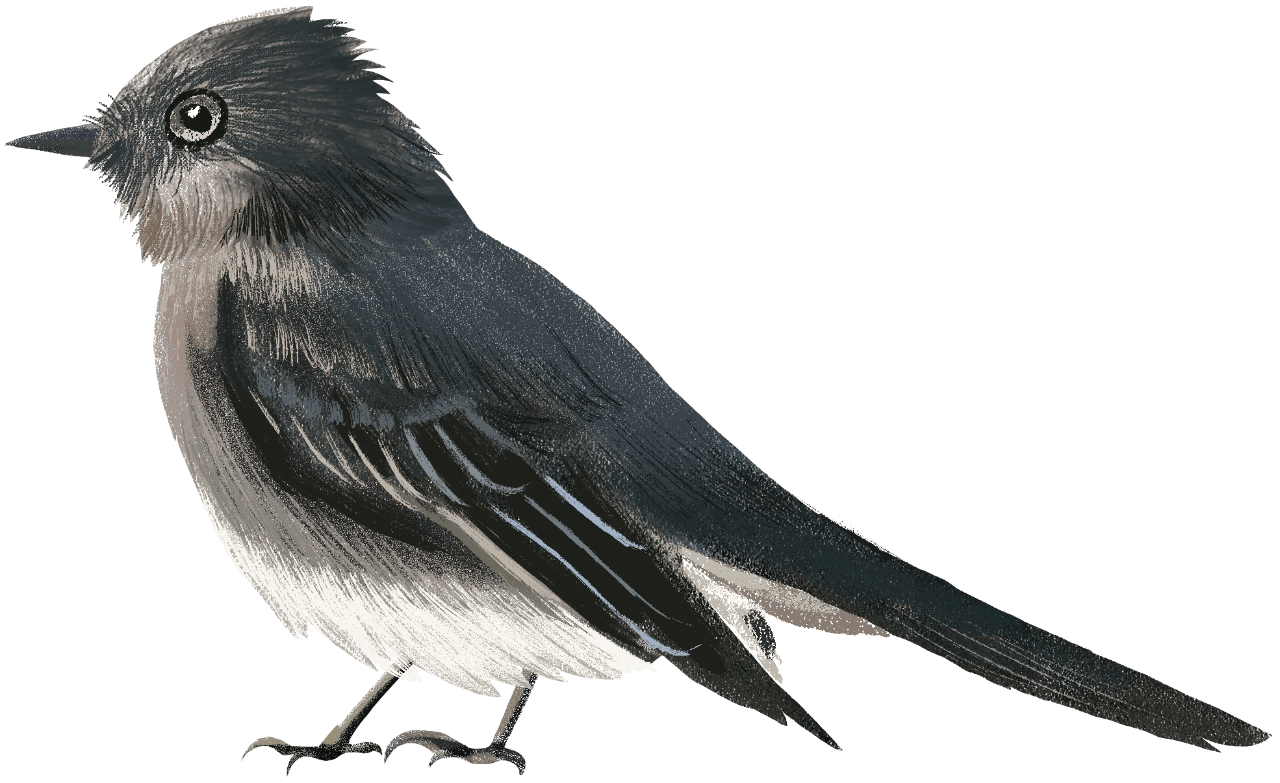
Black Phoebe
- Black phoebes catch flies using an interesting feeding technique called sallying, Swope said. When they spot an insect, they flit from their perch and catch it in their bill, then return just as quickly to the same perch.
- They build their nests in open cup shapes using mud, typically on cliff sides or underneath human-made structures like bridges.
- The species sings a distinct song that alternates between two two-syllable, musical phrases.
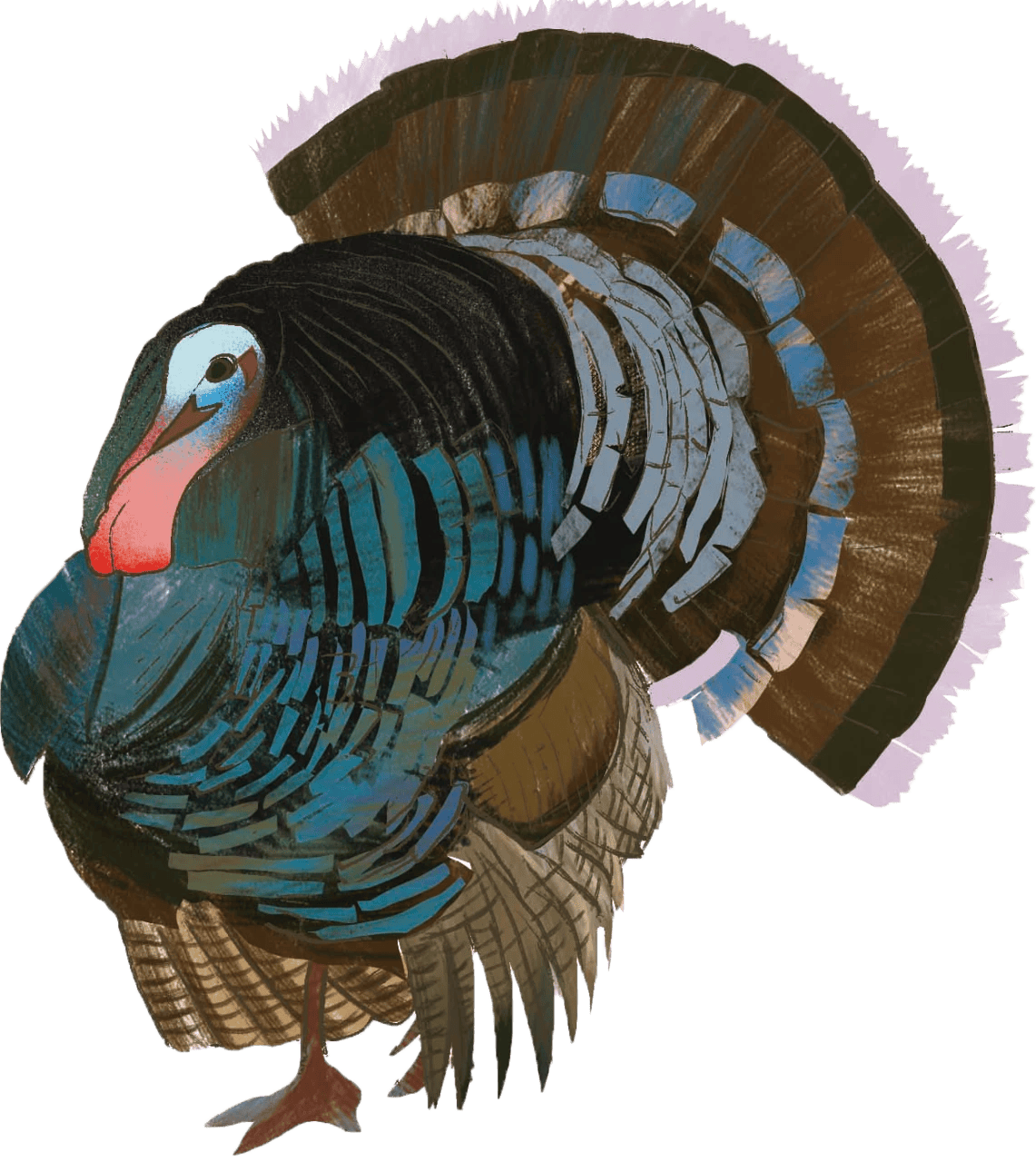
Wild Turkey
- The prehistoric turkeys that once populated California went extinct thousands of years ago. Modern wild turkeys were introduced by California Department of Fish and Wildlife officials starting in 1959.
- Turkeys are omnivores, consuming everything from leaves, acorns and berries to insects, snails and even small snakes. Swope advised amateur birders to look out for their distinct red eyes.
- In a 1784 letter to his daughter criticizing the original design for the Great Seal, Benjamin Franklin argued that the turkey was a “much more respectable bird” than the carnivorous, prey-stealing bald eagle.
Bird recordings via xeno-canto.org, licensed under CC BY-NC-SA 4.0 (creativecommons.org/licenses/by-nc-sa/4.0), edited for length: red-shouldered hawk by John A. Middleton Jr. (XC557418); wild turkey by Bruce Lagerquist (XC586568); western tanager by Peter Ward (XC801711); Nuttall’s woodpecker by Paul Marvin (XC814098); brown creeper and Anna’s hummingbird by Greg Irving (XC1077857, XC1083908); black phoebe by Richard E. Webster (XC1078222); Steller’s jay by Eamon Riordan-Short (XC1086866); spotted towhee by Manuel Grosselet (XC1105875); American yellow warbler by Tony Rinaud (XC1138522).


